
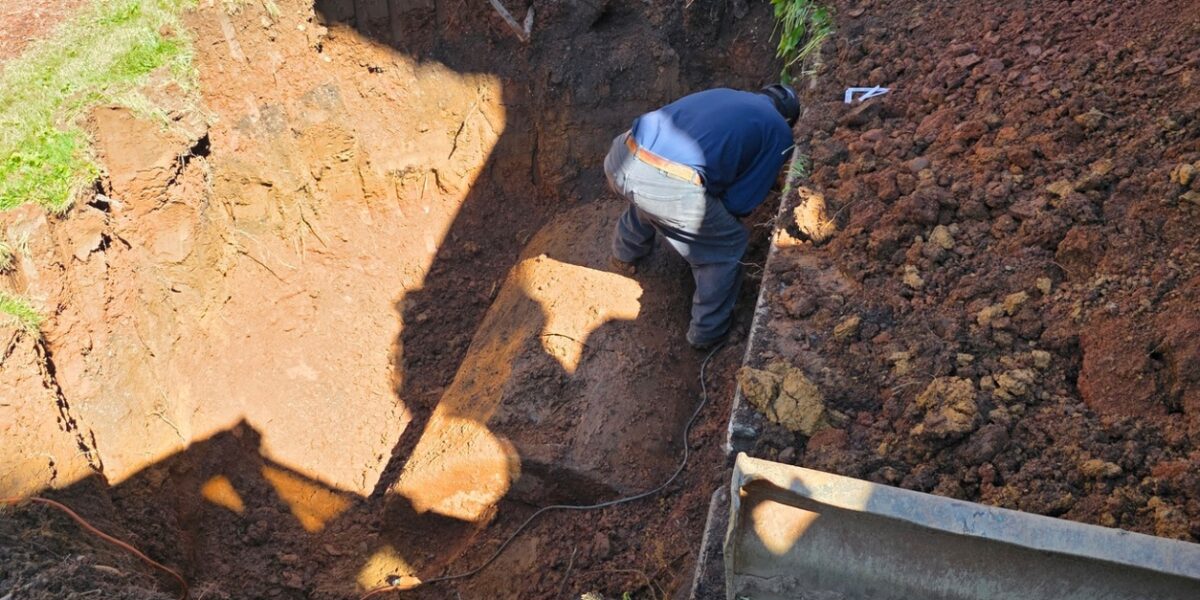
Can You Remove an Underground Oil Tank in a Tight Side Yard With No Concrete?
October 15, 2026
Yes, underground oil tanks can be removed from tight side yards even when space is limited. The absence of concrete or blacktop actually makes the job more straightforward since there is no pavement to break up. The main challenge is equipment access and swing room for excavation. An experienced contractor can assess your specific site and determine the right approach.
A Linden, NJ homeowner recently called us after being told he needed an underground oil tank pulled from a narrow side yard, roughly eight feet wide, with just dirt and some bushes. No concrete, no driveway, just soil. His question was simple: can you even get equipment in there to do it right? The answer is yes, but the details matter.
At Tank Solutions, we handle situations like this regularly. Here is what you need to know before scheduling your removal.
Why Does the Width of the Side Yard Matter for Tank Removal?
The width of the space determines what equipment can fit and how a crew can safely excavate without damaging your home or a neighboring structure. In a narrow corridor, a compact excavator may be used instead of a full-size machine. The operator also needs enough swing room to move dirt efficiently without hitting a fence or foundation.
Eight feet is tight but workable in many cases. Our crew evaluates factors like:
- Distance from the tank to the house foundation
- Whether there are overhead obstructions like wires or low eaves
- Proximity to a neighboring property or fence
- Depth of the tank and soil conditions
No two jobs are the same, which is why a site visit or at minimum a detailed conversation about the property is essential before quoting.
Does Not Having Concrete or Blacktop Make the Job Easier?
Generally, yes. When the ground is just soil, we skip the concrete cutting step entirely, which saves time and reduces mess. Dirt is easier to excavate and easier to backfill once the tank is out. It also means less disruption to your yard overall.
That said, loose or sandy soil does require care. The excavation walls need to stay stable, especially in a tight space where there is limited room to create a wide, sloped cut. Our team accounts for this during planning.
What Does the Underground Oil Tank Removal Process Look Like?
The process follows several steps, starting with permitting and utility mark-outs before a single shovel hits the ground. Here is a general overview of what to expect with a standard oil tank removal:
- Permit pulled from the municipality
- Utility lines marked by the state dig-safe program
- Excavation to expose the tank
- Tank cleaned of any remaining oil or sludge
- Tank cut, inspected, and removed from the ground
- Soil samples collected if required or requested
- Site backfilled and graded
- Municipal inspection completed
Permit timelines vary by town. Some municipalities turn them around quickly, others take longer. We handle the permit filing for you and will give you a realistic timeline based on the specific town where your property is located.
Should You Test the Soil After the Tank Comes Out?
In most cases, yes, and in many towns it is required before the job can be officially closed out. Even a tank that was filled with sand can have a history of leakage from previous use. A soil sample tells you whether any contamination is present so you can address it before it becomes a bigger problem, especially if you are selling or refinancing the property.
Our environmental team can walk you through what the results mean and what, if anything, needs to happen next.
Frequently Asked Questions
What if the tank is in the middle of the yard lengthwise, not near the street?
Tank depth and position along the length of the property affects how we stage equipment and where we place excavated soil. We account for this during our site assessment. Tanks buried toward the middle of a narrow side yard are common and very manageable.
Does it matter if the tank was filled with sand before removal?
A sand-filled tank has been decommissioned in place at some point, which is good. However, removal is still required in most cases for real estate transactions. The sand must be removed along with the tank, and the soil below should still be tested for any prior contamination.
Do I need to be present during the removal?
You do not need to be on-site the entire time, but we do recommend having someone available the day of the job in case we need access to the property or have questions. We will keep you informed throughout the process.
Ready to Remove Your Underground Oil Tank Near Linden, NJ?
If you have a buried oil tank in a tight side yard and are not sure whether removal is even possible, give us a call. We work throughout Linden, NJ and the surrounding area and are happy to talk through your specific setup before you commit to anything. Contact us today to get a quote and find out what the process looks like for your property.